PEOPLE
FACULTY
-
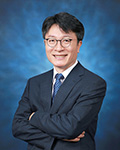 Ahn, Kyung Hyun
- Position: Professor
- Major: Microrheology
- Office: Building 302, Room 811 | Lab of Microrheology
- E-mail: ahnnet@snu.ac.kr
- Tel: +82-2-880-1879
The goal of our research is to understand flow-induced microstructure and its rheological properties, to understand rheological phenomena of particulate suspensions in complex flow fields, and to link between micro-scale and macro-scale dynamics using computer simulation. Our lab is pioneering in both international collaborations and university-industry relationships.
-
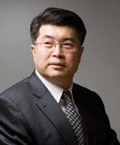 Char, Kookheon
- Position: Professor
- Major: Intelligent Hybrid Materials
- Office: Building 302, Room 725
- E-mail: khchar@snu.ac.kr
- Tel: +82-2-880-7431
Our laboratory mainly focuses on the fundamental and applied aspects of thin films involving macromolecules and nano-objects. The current emphasis of our research program is placed on the fabrication and characterization of block copolymer nanostructures, ultrathin functional multilayer films, organic/inorganic hybridization. We have already established synthetic schemes to prepare well-defined nanomaterials such as block copolymers, quantum dots, and sulfur composite. Furthermore, our fundamental knowledge on the interfacial manipulation at the molecular level can be applied to realize integrated devices or hierarchical structures with unique functions.
-
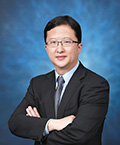 Choi, Jang Wook
- Position: Professor
- Major: Electrochemistry & Multi-Scale Energy Materials
- Office: Building 302, Room 724 | Multi-Scale Energy Science & Technology Lab. 515
- E-mail: jangwookchoi@snu.ac.kr
- Tel: +82-2-880-1653
Despite recent progress in rechargeable batteries, their practical performance must be improved to meet the demands in large-scale power sources such as electric vehicles (EV) and energy storage systems (ESS). In this regard, our group has focused on developing materials for next-generation lithium ion batteries (nickel-rich cathode, sulfur cathode, lithium metal anode, silicon anode, silicon binder) and post-lithium ion battery systems (all-solid-state batteries, aqueous zinc batteries, and electrochemical desalination).
-
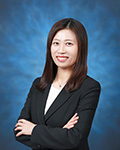 Hahn, Ji-Sook
- Position: Professor
- Major: Biomolecular Engineering
- Office: Building 302, Room 915 | Biomolecular Engineering Lab
- E-mail: hahnjs@snu.ac.kr
- Tel: +82-2-880-9228
Our research focuses on understanding and redesigning cellular regulatory networks. We are interested in elucidating signal transduction pathways in cellular adaptation to various environmental stress conditions. In addition, we are applying metabolic engineering and synthetic biology tools to develop robust yeast and methanotroph strains for the production of chemicals and biofuels from biomass.
-
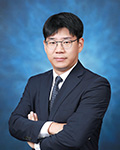 Hwang, Nathaniel S.
- Position: Professor
- Major: Biomedical Engineering
- Office: Building 302, Room 913 | Biomimetic Materials and Stem Cell Engineering Lab
- E-mail: nshwang@snu.ac.kr
- Tel: +82-2-880-1882
Our lab is studying about tissue engineering. In this research field, knowledge about physiological systems, diseases, and technological applications are needed to create artificial tissues and to regenerate damaged tissues. We focus on exploration of new methods of bone/cartilage regeneration, neuronal system reconstruction, and physiological disease therapies by using functional biomaterials, stem cell differentiation, and gene/drug delivery systems.
-
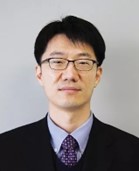 Kim, Jihyun
- Position: Professor
- Major: Semiconductor Process
- Office: Building 302, Room 726
- E-mail: jihyunkim@snu.ac.kr
- Tel: +82-2-880-8346
Our research covers multidisciplinary research on the basic properties of semiconductor materials to their applications for electronic device fabrication. The research area includes multidimensional from one- to three-dimensional semiconductor structures, IR to deep-UV optoelectronic devices, next-generation compound semiconductor materials and their applications for various kinds of electronic and optoelectronic devices. Ultra-wide bandgap semiconductor for next-generation high-power devices, photodetectors and high performance optoelectronic devices are systematically investigated through the combination of physical modelling and experimental approaches.
-
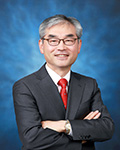 Kim, ByungGee
- Position: Professor
- Major: Protein and Metabolic Engineering
- Office: Building 302, Room 910
- E-mail: byungkim@snu.ac.kr
- Tel: +82-2-880-6774
In our laboratory, mass production of useful biochemicals (mainly fine chemicals, proteins, carbohydrates, metabolites) present in nature is attempted by using various microorganisms and industrial enzymes. To achieve this goal, we are interested in developing any biotechnological, i.e. in vitro and in vivo, methods advantageous over chemical synthetic methods. In the case of cellular reactions, we are interested in following quantitative approaches to optimize and maximize gene expressions and metabolic capacity by designing new reactions or deletion of existing reactions using recombinant DNA technology, and to control involved gene regulation such as transcription factors and/or single enzyme activity using synthetic biology approaches. In addition, we are keen to combine traditional biochemical reaction engineering approaches, such as developing novel reactors, design new reactions and optimizing operation parameters. We also use new analytical and quantitative techniques evolved recently, i.e. metabolomics, genomics, proteomics, bioinformatics, biochips developing high through-put screening system and system biology, which become more essential for their roles in understanding changes in cell physiology, achieving precise control of cell metabolisms and yielding improvement in target reaction systems. Finally, to predict and design new properties of proteins and cells, we are interested in developing computer modeling approaches for screening and designing new enzymes, changing their properties and cellular metabolism.
-
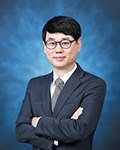 Kim, Byung-Soo
- Position: Professor
- Major: Chemical Engineering
- Office: Building 302, Room 807
- E-mail: byungskim@snu.ac.kr
- Tel: +82-2-880-1509
The B.S. Kim Laboratory develops therapies to repair damaged tissues or organs and to eradicate cancer. The therapies employ cells and biomaterials that modulate the body’s immune system.
-
Kim, Dae-Hyeong
- Position: Professor
- Major: Flexible Electronics
- Office: Building 302, Room 816
- E-mail: dkim98@snu.ac.kr
- Tel: +82-2-880-1634
Our group aims to develop high performance flexible and stretchable electronic devices incorporated with high-quality nanoscale materials, which enable novel multifunctional biomedical and optoelectronic systems.
Our first objective is to achieve significant improvement in current biomedical devices and/or to invent new and unprecedented medical systems that innovate clinical procedures and surgeries with the aim to help patients. Our devices can be integrated with the human body via fully implantable, minimally invasive, and skin-laminated modes, pursuing capabilities of high resolution/sensitivity health monitoring, real time data storage/analysis/diagnosis, and feedback therapeutic actuation/targeted drug delivery.
Our second objective is to develop high-performance soft optoelectronic devices using quantum dot nanocrystals, perovskite thin films, two dimensional nanomaterials, and unconventional processing and device technologies. Device examples include the ultrathin and transparent display, curved image sensor array, and highly efficient photovoltaic devices. -
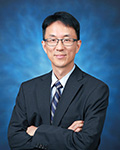 Kim, Do Heui
- Position: Professor
- Major: Energy and Environmental Catalyst
- Office: Building 302, Room 817 | Lab. for Energy and Environmental Catalysis
- E-mail: dohkim@snu.ac.kr
- Tel: +82-2-880-1633
Catalysis is a crucial technology which changes the rate of a chemical reaction. Our main research interests lie in the area of heterogeneous catalysis and reaction engineering, especially for the sustainable energy and the environment. Our research goal is to search for and develop the underlying chemical and engineering rules governing catalysis, especially regarding the relationship between the active sites and catalytic performance.
-
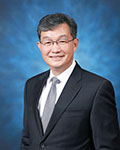 Kim, Jae Jeong
- Position: Professor
- Major: Semiconductor process
- Office: Building 302, Room 920 | Electronics Processing Research Laboratory
- E-mail: jkimm@snu.ac.kr
- Tel: +82-2-880-8863
We are studying the composition of electrolytes in copper electroplating in semiconductor processing, especially the effects of additives on copper crystallinity and thin film properties, and the filling of silicon through electrodes (TSV). Furthermore, the research focuses on studying the mechanism of action and degradation of plating additives. Also, as a research on the planarization process and the subsequent cleaning process in the semiconductor process, we are working on the cleaning process on the metal substrate and the silicon base substrate using the reactivity of the metal. In addition, research is being conducted on the application of electrochemically synthesized catalysts to carbon dioxide reduction, electrolysis, and the like.
-
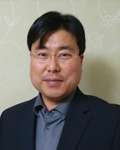 Kim, Youn Sang
- Position: Professor
- Major: Nano Interface Material Process
- Office: Building 302, Room 818 | Nano Matrix Lab
- E-mail: younskim@snu.ac.kr
- Tel: +82-2-880-7411
The Nano Matrix Lab researches organic/inorganic/oxide transistors and sensors, energy harvesting devices, next-generation high-efficiency energy storage devices, and functional nano-structure synthesis using the properties of nanomaterials and various interfacial processes. Through the collaboration of various research fields, we are developing the core source technology of nanoelectronic materials. In addition, we aim to do efficient research by industry-academia cooperation and have various efforts to cultivate challenging and creative professionals.
-
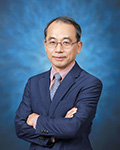 Kim, Young Gyu
- Position: Professor
- Major: Organic Synthesis
- Office: Building 302, Room 728 | Fine Chemicals Lab.
- E-mail: ygkim@snu.ac.kr
- Tel: +82-2-880-8802
Our lab has been focusing on research of high value-added fine chemicals such as pharmaceutical compounds, high performance molecules for electronic devices, high explosive materials, and other functionally specified target compounds based on the organic synthetic methodology. Another area of interest is development of novel stereo selective methods for asymmetric synthesis of organic compounds with biologically activity as well as chirality. It is our hope that we can design and prepare the target compounds with various functionalities based on better understanding of fundamental principles and knowledge on chemical reactivity and selectivity of molecules.
-
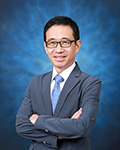 Lee, Jong-Chan
- Position: Professor, Head of the School of Biological and Chemical Engineering
- Major: Polymer Chemistry
- Office: Building 302, Room 720
- E-mail: jongchan@snu.ac.kr
- Tel: +82-2-880-7070
The research field of our group involves the preparation and application of polymers for bio-medical devices, fuel cells, Li batteries, composite materials, and water purification. This research can be achieved by the deep understanding of polymer chemistry which encompasses the synthesis, characterization, and process of the polymers, and then many of the academic and industrial projects related to polymers will have been and will be successfully performed.
-
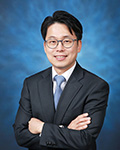 Lee, Jong Min
- Position: Professor
- Major: Advanced Process Control & Process Systems Engineering
- Office: Building 302, Room 723
- E-mail: jongmin@snu.ac.kr
- Tel: +82-2-880-1878
The SNU Energy Process Engineering Laboratory (EPEL) not only focuses on the existing fossil fuel-based energy production and chemical processes but also the development of related technologies for the nonconventional energy processes such as oils and biodiesel to enhance the economic efficiency. In particular, we are concentrating on energy saving and the development of sustainable operation strategies by developing optimization and model-based control technology.
-
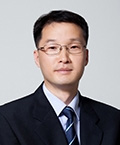 Lee, Won Bo
- Position: Professor
- Major: Soft Matter Physics
- Office: Building 302, Room 814
- E-mail: wblee@snu.ac.kr
- Tel: +82-2-880-7076
We are studying how the structure of molecules and their interactions affect the microscopic and macroscopic behavior. For this purpose, we focus on understanding the molecular phenomena of a system and its qualitative and quantitative properties by developing and simulating various theories and numerical methods. We also use statistical mechanics to elucidate how thermodynamic behavior of molecules in equilibrium or non-equilibrium states can be interpreted as parameters of molecules. These studies will ultimately become tools for predicting its static and dynamic properties when designing new molecules.
-
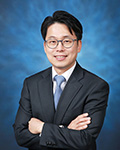 Lee, Youn-Woo
- Position: Professor
- Major: Supercritical Fluid Technology
- Office: Building 302, Room 726 l Supercritical Fluid Process Lab.
- E-mail: ywlee@snu.ac.kr
- Tel: +82-2-880-1883
The Supercritical Fluid Process Laboratory explores the use of supercritical fluids as environmentally acceptable alternatives to conventional solvents for chemical and physical processes. The current areas of application for supercritical fluids include particle design, material synthesis, chemical reactions, polymerization, separations, waste destruction, and cleaning.
-
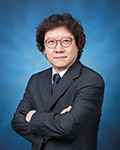 Paik, Seung Ryeoul
- Position: Professor
- Major: Biochemistry
- Office: Building 302, Room 911 l Advanced Protein Materials Lab
- E-mail: srpaik@snu.ac.kr
- Tel: +82-2-880-7402
We are studying the composition of electrolytes in copper electroplating in semiconductor processing, especially the effects of additives on copper crystallinity and thin film properties, and the filling of silicon through electrodes (TSV). Furthermore, the research focuses on studying the mechanism of action and degradation of plating additives. Also, as a research on the planarization process and the subsequent cleaning process in the semiconductor process, we are working on the cleaning process on the metal substrate and the silicon base substrate using the reactivity of the metal. In addition, research is being conducted on the application of electrochemically synthesized catalysts to carbon dioxide reduction, electrolysis, and the like.
-
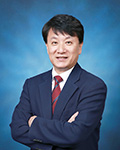 Park, Tai Hyun
- Position: Professor
- Major: Bioengineering
- Office: Building 302, Room 918
- E-mail: thpark@snu.ac.kr
- Tel: +82-2-880-8020
l Development of Artificial Olfactory and Gustatory Systems
The goal of our research is to develop artificial olfactory/gustatory systems based on human olfactory/gustatory receptors. Ultrasensitive artificial olfactory/gustatory systems are constructed by combining the olfactory/gustatory receptors with nanosensor platforms such as carbon nanotubes, conducting nanopolymers and graphenes.
l Cellular Engineering and Animal Cell Culture
This research focuses on the control of cellular behavior and differentiation using 30Kc19 protein. We also use ECM (extracellular matrix) produced from cell lines. These biomaterials are being studied for applications to biomedical and tissue engineering fields. -
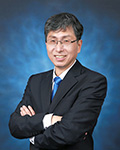 Sung, Yung-Eun
- Position: Professor
- Major: Electrochemical Energy
- Office: Building 302, Room 721
- E-mail: ysung@snu.ac.kr
- Tel: +82-2-880-1889
Main studies of Prof. Sung’s group include the electrochemical analyses of novel energy conversion system (fuel cell, water electrolyzer, CO2 reduction etc.) catalysts and the analyses of the structure and the interface between electrode and electrolyte in lithium ion battery system. In addition, the group focuses on the design and the development of non-noble metal catalysts for fuel cell and novel electrode materials for advanced battery systems, which encompass lithium sulfur battery and sodium ion battery.
-
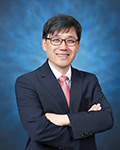 Yoon, Jeyong
- Position: Professor
- Major: Civil Engineering
- Office: Building 302, Room 810 | Water Environment & Energy Lab
- E-mail: jeyong@snu.ac.kr
- Tel: +82-2-880-8927
Our research group’s primary goal is to solve global water and energy problems by developing convergence technology based on environmental engineering, electrochemical and energy technology. Desalination research is based on capacitive deionization to deionize water, and to recover energy. The study on safe water engages electrochemical reaction including oxidant generation to purify water. Resource recovery intends to extract valuable metals from brine water, seawater, or wastewater. Overall, our group aims to enhance the quality of human life with future-oriented convergence technology.